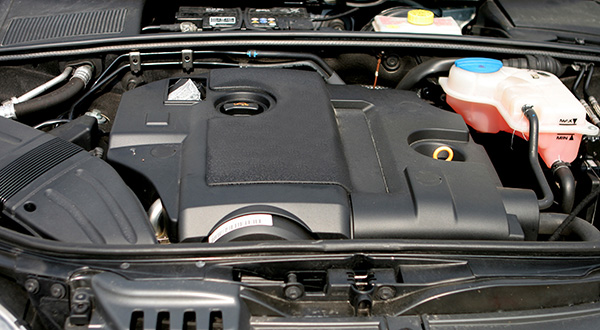
On many Audi and Volkswagen engines, the PCV system does much more than most drivers realize. It controls crankcase pressure, routes fuel vapors back into the intake, and helps keep oil from being pushed past seals and gaskets.
When the PCV valve or diaphragm starts failing, the symptoms can look like several different engine problems at once. Rough idle, oil leaks, whistling noises, increased oil use, and check engine lights can all trace back to the same system. Because we specialize only in Volkswagen and Audi vehicles, this is one of those problems we know to look for early when the symptoms fit.
The PCV System Controls Pressure Inside the Engine
Every engine creates some combustion gases that slip past the piston rings and enter the crankcase. The PCV system pulls those gases out and sends them back through the intake so they can be burned instead of building pressure inside the engine.
On many VW and Audi engines, that system uses a diaphragm and internal passages built into a housing on or near the valve cover. If the diaphragm tears or a valve sticks, crankcase pressure can become too high or too low. Either direction can create drivability problems and oil leaks.
Heat and Age Break Down the PCV Diaphragm
The PCV assembly spends its life exposed to hot oil vapor, engine heat, and repeated pressure changes. Over time, the rubber diaphragm can harden, crack, or tear.
Once that happens, the system no longer controls airflow as designed. At our shop, we often see this on higher-mileage VW and Audi engines, especially when the PCV assembly has never been replaced. The failure can be gradual, so the driver may notice only a slight idle change or oil smell at first.
A Failed PCV Valve Can Cause a Rough Idle
When the PCV diaphragm tears, extra air can enter the intake system without being measured correctly. That creates a vacuum leak and changes the air-fuel mixture.
The engine can idle rough, shake at stoplights, or stumble shortly after startup. You may also see lean mixture faults or misfire codes. Because vacuum leaks, ignition problems, and fuel delivery issues can create similar symptoms, we test the PCV system instead of replacing it just because the engine is running rough.
Whistling or Honking Noises Are a Useful Clue
One of the more recognizable signs of a PCV problem is a high-pitched whistle or honking sound from the top of the engine. The noise often changes when you remove the oil cap because it alters crankcase pressure.
That sound comes from air being pulled through a failed diaphragm or restricted passage. It can be loud enough to make drivers think a belt or turbocharger is failing. When we hear it on a VW or Audi engine, the PCV system moves very high on the inspection list.
PCV Problems Can Increase Oil Consumption
Incorrect crankcase vacuum can pull more oil vapor into the intake than normal. That oil gets burned with the air-fuel mixture and can increase oil consumption between services.
In some cases, the driver notices that the oil level drops faster but never sees a puddle under the car. We look for oil inside intake plumbing, excessive crankcase vacuum, and signs of oil burning before assuming the engine itself is worn out. A failed PCV system can create significant oil use without damaged piston rings.
Too Much Crankcase Pressure Can Create Oil Leaks
If the PCV system cannot vent the crankcase properly, pressure builds inside the engine. That pressure looks for a way out, often through seals and gaskets.
Possible results include:
- Valve cover gasket leaks
- Rear main seal leaks
- Oil around camshaft seals
- Oil pushed through weak gasket areas
- Fresh leaks that appear soon after another repair
- Oil residue around the PCV housing
That is why we don't treat every new oil leak as an isolated gasket problem. If crankcase pressure is too high, replacing the leaking seal without fixing the PCV issue can lead to another leak later.
A PCV Failure Can Trigger Check Engine Lights
Because the PCV system is connected to the intake, a failure can affect fuel trims and engine vacuum enough to set fault codes. Lean mixture codes, idle control faults, and cylinder misfires are all possible depending on how the system fails.
During an inspection, we look at fuel trim data, crankcase vacuum, misfire counts, and the physical condition of the PCV assembly. That gives us a much clearer answer than replacing ignition coils, oxygen sensors, or other parts simply because the computer stored a code.
Fixing the PCV Problem Early Can Prevent Other Repairs
A failing PCV valve is not the most expensive part on the engine, but ignoring it can create more expensive problems. Excessive vacuum can affect seals, while excess pressure can push oil out of the engine.
Regular maintenance gives us a chance to catch developing oil leaks, unusual vacuum, and early PCV symptoms before they spread. On VW and Audi engines, we also inspect related hoses and intake connections because a cracked hose can create a similar vacuum leak.
Get Audi And Volkswagen PCV Service In Pasadena, CA, With European Auto Hause
If your Audi or Volkswagen has a rough idle, new oil leaks, increased oil consumption, or a whistling noise from the engine, European Auto Hause in Pasadena, CA, can inspect the PCV system and related intake components.
Schedule a PCV inspection with a shop that works exclusively on Volkswagen and Audi vehicles and knows the failure patterns these engines tend to develop.