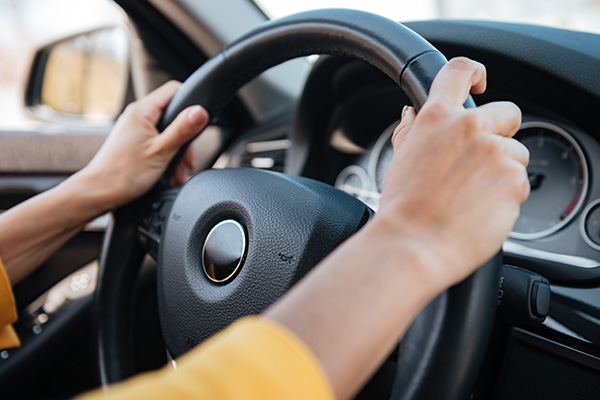
Some drivers sit close to the steering wheel because it feels easier to reach the pedals, see the front of the vehicle, or control the wheel. Others developed the habit while learning to drive and never adjusted their position as their confidence increased.
Sitting too close can restrict steering movement, increase fatigue, and place the driver too near the airbag. A correct seating position should provide full pedal control while leaving enough room for the arms, legs, and safety systems to work as designed.
Why Sitting Close Can Feel More Comfortable
Drivers often move forward when they cannot press the pedals firmly without stretching. This is common when the seatback is reclined too far, the steering wheel is positioned incorrectly, or the driver has shorter legs. Moving the entire seat toward the steering wheel may seem like the easiest correction.
Some drivers also believe that sitting close gives them greater control. Their elbows remain deeply bent, the wheel feels easier to turn, and the front corners of the vehicle may appear easier to judge. In reality, excessive closeness can reduce leverage and limit the range of motion needed for quick steering corrections.
Airbag Distance Is A Primary Safety Concern
The driver airbag deploys rapidly from the center of the steering wheel during certain collisions. It must inflate before the driver’s upper body moves too far forward. Sitting directly against the wheel leaves less space for the airbag to expand and increases the force reaching the chest, face, and arms.
Drivers should create as much practical distance as possible while maintaining full control of the pedals and steering wheel. A commonly used target is at least 10 inches between the center of the steering wheel and the breastbone. Vehicle design and body size vary, so the priority is maximizing safe space without compromising pedal operation.
The steering wheel should point toward the chest rather than the face. On vehicles with tilt and telescoping adjustment, moving the wheel closer can allow the seat itself to move farther back while keeping the driver’s hands in a strong position.
Proper Pedal Reach Comes First
Move the seat far enough forward that the brake pedal can be pressed fully without the hips lifting from the seat. The knee should remain slightly bent when the pedal is fully depressed. A locked knee reduces control and can increase injury risk during a collision.
Drivers of manual-transmission vehicles should apply the same test to the clutch pedal. The clutch must reach the floor without requiring the leg to straighten completely or the body to shift forward.
After setting pedal distance, check the steering wheel and seatback. Do not move the seat closer simply because the wheel feels too far away. Use the telescoping adjustment when available, then adjust the seatback to support the shoulders and upper back.
How Your Arms Should Reach The Wheel
With the shoulders resting against the seatback, extend both arms toward the steering wheel. The wrists should reach the top of the wheel without the shoulders lifting away from the seat. When the hands return to a normal driving position, the elbows should remain slightly bent.
Sitting too close leaves the elbows sharply bent and can make large steering inputs awkward. The arms may cross the body too early during a turn, limiting control. Sitting too far away creates the opposite problem by forcing the shoulders forward and reducing the driver’s ability to make precise movements.
Keep both hands positioned where they can steer without interfering with airbag deployment. Resting an arm across the center of the wheel places it directly over the airbag cover and should be avoided.
Visibility Should Be Adjusted Separately
Some drivers move forward because they want a better view over the hood. Seat height adjustment is a better solution when the vehicle provides it. Raising the seat can improve the view of the road while preserving safe distance from the steering wheel.
The driver should be able to see the road clearly, read the instrument panel, and check mirrors without leaning. There should also be space between the top of the head and the roof. Sitting so high that the head nearly touches the headliner can create discomfort and reduce protection during a rollover.
After adjusting the seat, reset all mirrors. A corrected seating position changes viewing angles, so mirrors that were properly aimed before may now leave unnecessary blind areas.
Head Restraint And Seatback Position
The head restraint helps limit rearward head movement during a rear impact. Its upper edge should reach approximately the top of the head, and the back of the head should remain close to it during normal driving.
A heavily reclined seatback moves the body away from the restraint and may encourage the driver to slide the seat closer to reach the wheel. An overly upright seatback can also become uncomfortable during longer drives. Choose a position that supports the full back while allowing the shoulders to remain against the seat during steering.
A proper setup should provide:
- Full brake and clutch pedal travel
- A slight bend in the knees
- Slightly bent elbows
- Shoulders supported by the seatback
- Clear visibility of the road and instruments
- Adequate space from the steering wheel airbag
- Correct head restraint height
Take Time To Adjust A Different Vehicle
Drivers should reset the seat, wheel, and mirrors whenever they enter an unfamiliar vehicle. Rental cars, family vehicles, and customer loaners may have been adjusted for someone with a completely different height and driving position.
Do not begin driving while still reaching for seat controls. Complete the adjustment while parked, fasten the seat belt, and confirm that every pedal and control can be reached comfortably. During an inspection or regular maintenance visit, damaged seat tracks, failed power-seat switches, and steering wheel adjustment problems should be repaired because they can prevent a safe driving position.
Get Volkswagen And Audi Service In Pasadena, CA, With European Auto Hause
European Auto Hause in Pasadena, CA, specializes exclusively in Volkswagen and Audi vehicles. Our team can address seat adjustment faults, warning lights, steering concerns, and other VW or Audi service needs.
Contact us to schedule an appointment for your vehicle.