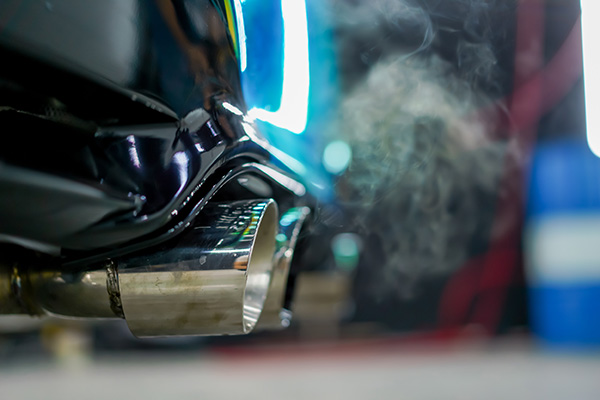
Thick white smoke can be one of the most confusing symptoms because it is easy to misread from the driver’s seat. Some situations are harmless and temporary, while others indicate the engine is pushing fluid where it does not belong. The hardest part is that the car may still feel okay while the exhaust looks completely wrong.
The goal is to sort the harmless from the urgent without guessing.
What White Smoke Usually Indicates
White smoke is usually vapor, but the source of that vapor matters. Exhaust always carries some moisture, and under the right conditions, it can look dramatic. When it turns thick, lingers, and keeps coming, it often points to something entering the exhaust stream that should not be there.
Pay attention to three things: how long it lasts, whether it has a sweet smell, and whether the smoke hangs in the air. Those details do more for troubleshooting than trying to identify the problem by color alone.
When It Is Just Condensation
A normal amount of condensation is common on cooler mornings, especially after the car has been sitting overnight. You may see a cloud for the first few minutes, then it fades as the exhaust warms up and moisture burns off. This vapor is usually thin and disappears quickly in the air.
If it only happens at startup and clears consistently, that is often the simplest explanation. Still, thick clouds that keep coming after the engine is fully warm are not the same thing. If the smoke is still heavy after a longer drive, treat it as a symptom that deserves attention.
Coolant Getting Into The Exhaust Stream
Coolant is the big reason thick white smoke gets taken seriously. When coolant enters a combustion chamber, it can turn into dense vapor and exit through the exhaust. You may also notice a sweet smell, coolant level dropping, or the temperature gauge behaving differently than it used to.
On many VW and Audi engines, coolant loss paired with white smoke can be tied to sealing issues at the head gasket, cracks, or, in some cases, components that route coolant near intake paths. If you are topping off coolant repeatedly, that is not a coincidence. A small internal leak can start subtle, then become more obvious quickly as heat cycles accumulate.
Oil And Fuel Issues That Can Mimic White Smoke
Not every white-looking cloud is coolant. Oil can sometimes appear light in certain lighting, especially if it is burning in a way that creates a hazy plume rather than a darker smoke. Fuel issues can also create a white or grayish cloud, particularly during cold starts or when combustion is incomplete.
This is where smell and behavior help. Coolant vapor often has a sweet odor, oil smoke tends to smell sharp and acrid, and fuel-rich exhaust can sting your eyes. If the car is running rough, stumbling, or taking longer to start, fuel or ignition issues may be at play.
Quick Checks Before You Keep Driving
If the smoke is thick and persistent, do not keep driving as if nothing is happening. The two main risks are overheating and damage to emissions components if the engine misfires or ingests fluid. A quick look can help you decide whether you should shut it down and get help.
Here are a few safe checks that can point you in the right direction:
- Check the coolant reservoir level when the engine is cool and note any drop over a day or two
- Watch the temperature gauge closely during the next short drive
- Notice whether the smoke has a sweet smell or lingers heavily after warm-up
- Look for rough idle, misfire feel, or a flashing check engine light
If the temperature rises above its usual spot or the engine starts running rough, stop driving and have it checked. We have seen situations where a small issue turned into an overheated engine because the driver tried to stretch it another day.
How We Pinpoint The Source On VW And Audi Engines
The fastest way to get a real answer is to confirm whether coolant is actually being lost and where it is going. We start by checking coolant level, pressure-testing the cooling system, and looking for external leaks that might be evaporating before they drip. If pressure drops with no visible leak, that points toward internal loss.
From there, we look at scan data, misfire information, and signs of coolant contamination. An inspection may include checking for combustion gases in the cooling system and looking for evidence in the spark plug areas. Regular maintenance helps prevent some causes, but once thick white smoke is present, the priority is confirming the source so the repair is targeted and not a parts dart throw.
Get Exhaust Smoke Inspection In Pasadena, CA, With European Auto Hause
If your VW or Audi is emitting thick white smoke, European Auto Hause in Pasadena, CA, will determine whether it is condensation or an internal issue that requires immediate attention. We will test the cooling system, review related engine data, and provide a clear repair plan based on our findings.
Schedule your visit so you can stop guessing and get a straight answer.