Audi and Volkswagen engines can feel sharp and responsive when the ignition system is working correctly. The engine starts cleanly, idles evenly, and pulls without hesitation. When an ignition coil or spark plug starts failing, that feel can change quickly.
The tricky part is that ignition problems do not always manifest the same way. One driver may notice a rough idle. Another may feel the engine shake under acceleration. Another may only see a flashing check engine light. Since Audi and Volkswagen models often use coil-on-plug ignition systems, a single weak coil or worn plug can make the whole engine feel off.
What Spark Plugs And Ignition Coils Do
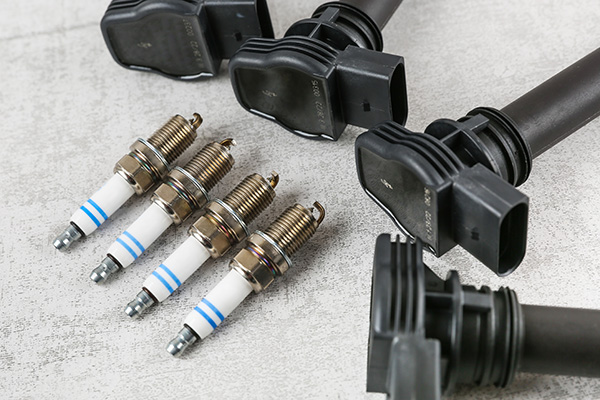
Spark plugs ignite the air-fuel mixture in each cylinder. Ignition coils create the high voltage needed for that spark. On many Audi and Volkswagen engines, each cylinder has its own coil sitting directly over the spark plug.
That setup works well when everything is healthy. It also means one failing coil can affect one cylinder and create a misfire. A worn spark plug can do the same thing. The engine computer may detect the misfire and turn on the check engine light, but the light only tells part of the story.
The cause still needs to be tested. A misfire code may point to a cylinder, but the problem could be the coil, plug, wiring, injector, compression, or another engine issue.
Rough Idle Or Engine Shaking
A rough idle is one of the most common signs of ignition trouble. The engine may shake at a stoplight, feel uneven after startup, or sound like it is not firing cleanly. On some engines, the shaking may come and go.
A weak coil or worn spark plug may fire well enough at certain times and fail under other conditions. Cold starts, damp weather, heat, or engine load can make the symptom worse. If the idle feels rough and the check engine light is on, ignition testing should be part of the inspection.
Audi and Volkswagen engines can also run rough due to carbon buildup, vacuum leaks, PCV problems, fuel injector issues, or sensor problems. That is why the ignition system should be tested instead of assuming one part is bad.
Hesitation When Accelerating
Ignition problems often become more apparent under load. Pressing the gas pedal asks the spark plugs and coils to work harder. If one coil is weak or one spark plug is worn, the spark may not fire cleanly.
The driver may feel hesitation, jerking, stumbling, or a short loss of power during acceleration. The problem may be worse when merging onto the highway, climbing hills, or passing. Sometimes the vehicle feels fine during light driving and only acts up when more power is needed.
That pattern is useful. A misfire under load often points toward ignition, but fuel delivery, boost leaks, and air intake issues can feel similar on turbocharged Audi and Volkswagen engines.
Check Engine Light Or Flashing Light
A steady check engine light can appear when the engine computer detects a misfire or ignition-related issue. The code may identify a specific cylinder, such as cylinder one, two, three, or four. That information helps guide testing.
A flashing check engine light is more urgent. It often means the misfire is severe enough to risk damage to the catalytic converter. When unburned fuel reaches the exhaust, it can overheat and damage the converter. That repair can become much more expensive than replacing worn ignition parts.
If the check engine light flashes, it is best to avoid hard driving and have the vehicle checked soon. Continuing to drive with a strong misfire can turn a simple repair into a larger one.
Poor Fuel Economy And Weak Performance
A failing spark plug or ignition coil can make the engine burn fuel less efficiently. The vehicle may use more fuel, feel weaker, or lose the crisp response it normally has. The change can be subtle at first, especially if the misfire only happens occasionally.
Turbocharged Audi and Volkswagen engines depend on clean combustion. If one cylinder is not firing correctly, the engine computer may adjust fuel and timing to protect the engine. That can reduce power and make the vehicle feel less lively.
Poor fuel economy alone does not prove an ignition problem. Tire pressure, sensors, fuel system issues, airflow problems, and driving conditions can all affect mileage. But when poor mileage is accompanied by shaking, hesitation, or a check engine light, ignition parts should be checked.
Warning Signs Ignition Parts Need Attention
Ignition problems can show up through several small changes before the vehicle becomes hard to drive. Watch for:
- Rough idle
- Engine shaking
- Hesitation during acceleration
- Jerking under load
- Check engine light
- Flashing check engine light
- Hard starts
- Poor fuel economy
- Loss of power
- Misfire codes
These signs do not always mean the coils and plugs both need replacement. Testing can show whether a coil failed, whether the plugs are worn, or whether another system is causing the misfire.
Why Correct Parts And Service Matter
Audi and Volkswagen engines can be sensitive to spark plug type, gap, heat range, and coil quality. Using the wrong plug or a low-quality coil can cause repeated misfires, poor performance, or a shorter service life.
If one coil has failed and the spark plugs are overdue, it may make sense to service related parts together. If the plugs are recent and only one coil failed, the repair plan may be different. The right answer depends on mileage, service history, fault codes, and test results.
Regular maintenance helps prevent worn plugs from stressing ignition coils. It also gives technicians a chance to catch oil leaks into plug wells, damaged connectors, and early misfire patterns before the engine runs poorly.
Get Audi And Volkswagen Ignition Repair In Pasadena, CA, With European Auto Hause
If your Audi or Volkswagen has a rough idle, misfire, check engine light, hesitation, or weak acceleration, European Auto Hause in Pasadena, CA, can test the ignition coils, spark plugs, wiring, and related engine systems.
For Audi and Volkswagen ignition repair before a small misfire becomes a larger problem, contact us to schedule an appointment.