You pull up to the pump in your Volkswagen or Audi and eye the price gap between regular and premium. The manual says premium is recommended, but does that mean you have to pay up every single time? Read the wording closely before you make a habit of hitting the cheaper button.
Recommended fuel and required minimum octane aren't the same thing. For some engines, a lower grade is permitted, sometimes with reduced performance. Another VW or Audi may flat-out require premium fuel. The answer depends on your exact vehicle, not the badge on the grille.
Premium Fuel Recommendations Need To Be Read In Full
Start with the owner's manual and the information near the fuel filler. Look for both the preferred grade and any stated minimum. A recommendation for higher octane doesn't automatically mean every lower grade is fine, and a required minimum is never optional.
Model year, engine, market, and software can all change the instructions, so two similar cars can have different fuel requirements. If the manual allows an alternative grade, read the limits or performance notes that come with it. A line about an emergency fill-up isn't permission to make that grade your everyday choice.
Octane Measures Knock Resistance Rather Than Fuel Strength
Octane tells you how well gasoline resists abnormal combustion called knock. Under demanding conditions, the air-fuel mixture can ignite uncontrollably instead of burning smoothly after the spark. Engines with higher cylinder pressures, including many turbocharged designs, may need more resistance to that problem.
Premium doesn't pack more usable energy into every gallon, and octane isn't a cleanliness score. A higher number means more knock resistance. That's why some engines gain real performance from premium while an engine designed for a lower grade may show little benefit from the extra cost.
VW And Audi Engine Controls Can Adjust To Fuel
Many modern VW and Audi engines monitor knock and can adjust ignition timing or other settings to protect themselves within the permitted fuel range. The catch is that the adjustment can cost you power. You'll likely notice it more under hard acceleration than on a gentle drive across town.
That safety net isn't a reason to ignore a required minimum. It has limits, and the wrong fuel can hurt performance or even cause damage. For a vehicle that explicitly permits lower octane, the adjustment explains how it copes. It doesn't mean every turbocharged VW or Audi gets the same pass.
Premium Fuel Benefits Can Change With Driving Conditions
An engine's demand for knock resistance goes up under heavier load or high temperatures. Your car may respond differently on a steep climb, during sustained acceleration, or with a full load than it does on a relaxed commute. Follow any fuel instructions tied to those conditions.
If higher octane is recommended rather than required, the practical benefit can be modest in ordinary driving. Better mileage alone may not cover the extra cost, and results vary by engine. To judge fairly, compare the grades your manual permits under similar conditions. One tank of errands against one tank of highway miles tells you nothing.
Fuel Pump Labels Use An Octane Scale That Needs Checking
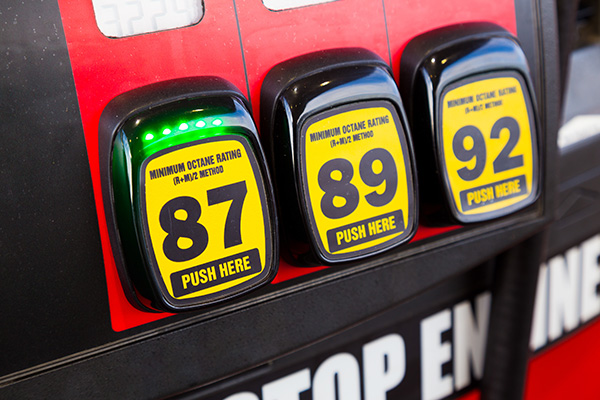
U.S. pumps normally show the Anti-Knock Index, often labeled AKI or as an average of RON and MON. Manuals written for other markets may list Research Octane Number, or RON. Those numbers come from different methods, so don't compare them as if they were the same scale.
Before you choose fuel for your VW or Audi, confirm:
- The exact engine and the manual that applies to your vehicle.
- The required minimum and the recommended octane, on the correct scale.
- Any limits on ethanol content or alternative fuel grades.
If the instructions are unclear, have them checked. Don't just go with what another owner told you.
Premium Fuel Won't Fix Every Engine Running Problem
Hesitation, rough running, or a check engine light can come from ignition, air leaks, fuel delivery, or other faults. A tank of premium won't repair a worn spark plug, a failed sensor, or a leaking intake connection. Even when symptoms start right after you refuel, the fuel grade is only one possible explanation.
Tell us where and when you filled up, what grade you used, and whether the problem shows up under load or at idle. Persistent knocking, severe power loss, or a flashing engine warning needs prompt attention. And please don't keep flooring it to see whether another grade makes the symptoms go away.
VW And Audi Fuel Choices Should Follow The Vehicle’s Instructions
For an unmodified vehicle, the original fuel guidance is your starting point. An engine tune can change the required octane, so a modified VW or Audi needs instructions that fit its current setup. The stock manual may no longer tell the whole story.
Keep the decision simple. Use the required grade, and consider an allowed alternative only within the manufacturer's limits. When a premium grade is recommended, weigh the trade-off between response, performance, and cost. Keep up with routine maintenance too, because good fuel and a healthy engine work as a team. One can't make up for skipped service on the other.
Get VW And Audi Fuel Guidance In Pasadena, CA, With European Auto Hause
European Auto Hause in Pasadena, CA, works exclusively on Volkswagen and Audi vehicles. We can help you understand your vehicle's fuel requirements and look into hesitation, knocking, or other engine concerns before you spend money experimenting with different grades.
Contact us to schedule service for your VW or Audi and talk through its fuel requirements.